Facades
Sea salt and facades on the coast: why the paint peels
If you live on the coast, you will have seen it: facades painted not long ago that are already cracking, peeling or covered in white stains. It is not bad luck: it is the sea salt. We explain what happens and how to avoid it.
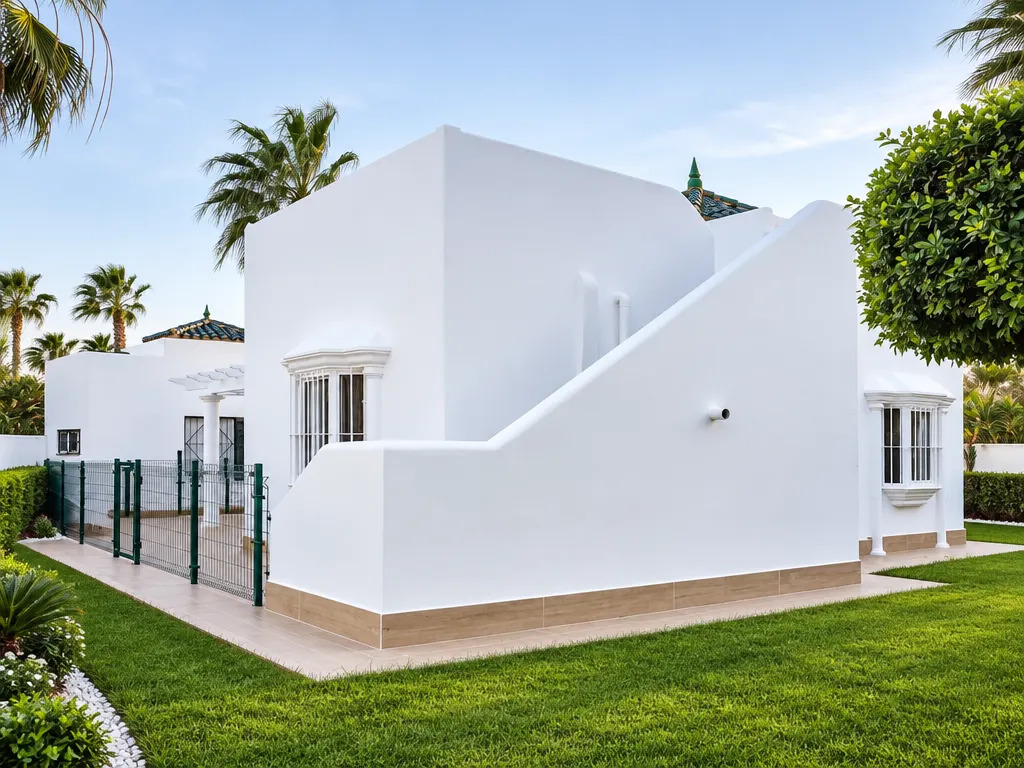
What sea salt does to a facade
Sea air carries salts in suspension that settle on facades. Those salts absorb moisture from the air and, when they dry, crystallise inside the pores of the wall and underneath the paint.
That cycle of damp and drying is repeated every day on the coast. The salt crystals push the paint from the inside until it blisters, cracks and ends up falling off in flakes.
The sun does the rest
In Águilas, San Juan de los Terreros, Mazarrón or Vera, facades get sun almost all year round. The radiation breaks down the paint, makes it lose colour and elasticity, and leaves it more fragile against sea salt and the changes in temperature between day and night.
Signs that your facade is suffering
- Whitish stains or white powder on the wall: these are the salts coming to the surface.
- Blisters or bubbles in the paint.
- Paint that peels or falls off in flakes, especially low down and in the areas most exposed to the wind from the sea.
- Fine cracks in the render.
- Dull colour, or paint that comes off on your hand when you touch it.
Why painting over it is not enough
The most common mistake is to put a coat of paint over the damaged facade. The salts are still there underneath, and before long the new paint peels just like the old.
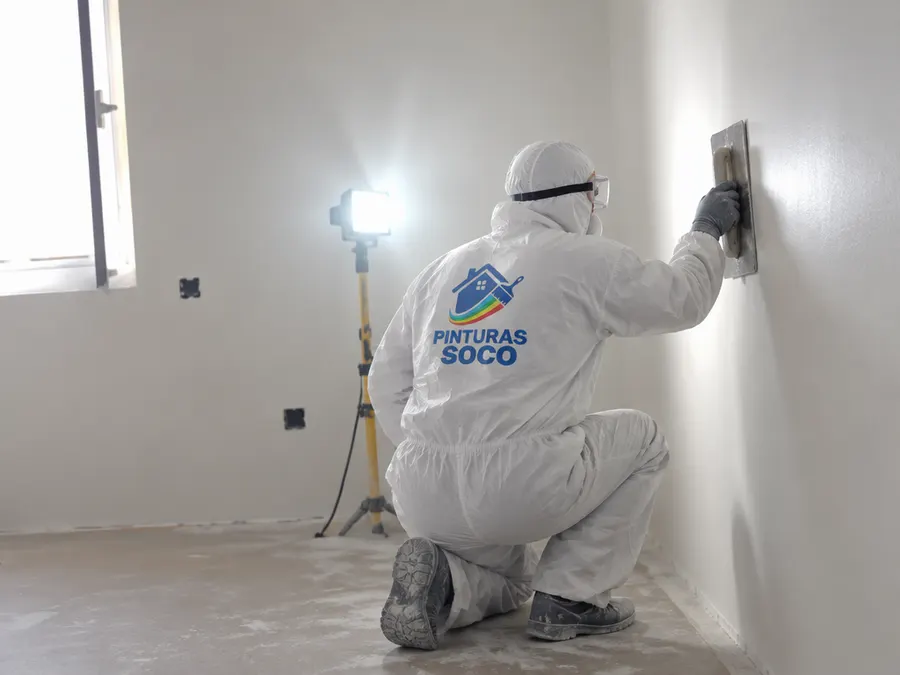
A facade on the coast needs preparation: cleaning off the salts and dirt, removing all the loose paint, making good and sealing the cracks, and applying a suitable sealer or primer before the finishing paint.
What paint a facade by the sea needs
For exteriors on the coast you have to use paints designed for the job: breathable, so the moisture in the wall can get out without lifting the paint, resistant to the sun’s rays and with good elasticity to follow the small movements of the facade.
There is no single paint for every facade. It depends on the surface, its condition and how exposed it is to the sea. During the visit we recommend the one that suits yours.
The parts of the facade that suffer most
- The sides facing the sea, which take the salt-laden wind directly.
- The lower part of the walls, where damp and splashes build up.
- Cappings, cornices and window sills, where water sits.
- Areas with no eaves, which get all the rain and sun.
That is why a facade is sometimes fine on one side and badly deteriorated on another.
How to make the paint last longer
- Check the facade once a year and act as soon as cracks or blisters appear.
- Clean the areas where salts and dirt build up.
- Repair in good time any downpipes and gutters that wet the wall.
- Do not let the paint peel completely: repainting in time works out better value.
How often does a facade on the coast need painting?
There is no fixed figure: it depends on which way it faces, how close it is to the sea, the paint that was used and how it was prepared. A facade that was well prepared and painted with a suitable product lasts much longer than one painted in a hurry over the old paint. The important thing is to watch for signs of wear and not wait until it falls off.
When it is a painting job and when it is not
If the damp comes from the ground and rises up the lower part of the walls, the problem is not solved by paint alone: it needs a specific damp treatment. We are painters and do not do building work, so if that is your case we will tell you clearly during the visit.
If it is the paint that has reached the end of its life because of the sun and sea salt, good preparation and a suitable paint leave the facade like new. We do this in San Juan de los Terreros, Mazarrón, Vera, Garrucha and all along the Águilas coast.
Frequently asked questions
Why is the paint on my facade peeling if it is new?
Usually because the salts and loose paint were not removed before painting, or because the paint was not suitable for the coast.
What are the white stains on the wall?
They are usually salts that come to the surface with the damp. They have to be cleaned off before painting.
Is the visit to see the facade free?
Yes, the visit and the quote are free and without obligation.