Smooth walls
Getting rid of gotelé: remove it or cover it? What suits your home
Gotelé, the textured wall finish, was king of Spanish apartments for decades. Today it is what ages a home most. If you are thinking of getting rid of it, the first thing is to know which type you have, because that decides whether it is removed or covered.
Why everyone wants to get rid of gotelé
Gotelé, the bumpy textured finish on so many Spanish walls, collects dust, stains easily and gives a home a dated look. It also makes any colour look duller, because the texture creates shadows.
Smooth walls, on the other hand, reflect light better, are easier to clean and make a home look bigger and more modern. That is why wall smoothing is the job we are asked for most.
First: which gotelé do you have?
Not all gotelé is the same. There are two main types:
- Distemper gotelé (al temple): the oldest kind. It is a paint that softens with water and in many cases can be removed.
- Emulsion gotelé (plástico): made with emulsion paint, it does not dissolve in water and is very firmly stuck. Trying to pull it off usually damages the wall.
What is more, many walls have several coats of paint over the original gotelé, which changes how it behaves. That is why it is worth having a professional look at it before deciding.
Option 1: removing the gotelé
When the gotelé is distemper and the wall is sound, it can be removed. The wall then has to be gone over, because removing it usually reveals imperfections from the original build, and sanded before painting.
It is a clean option when the surface allows it, but it is not always possible.
Option 2: covering the gotelé (smoothing)
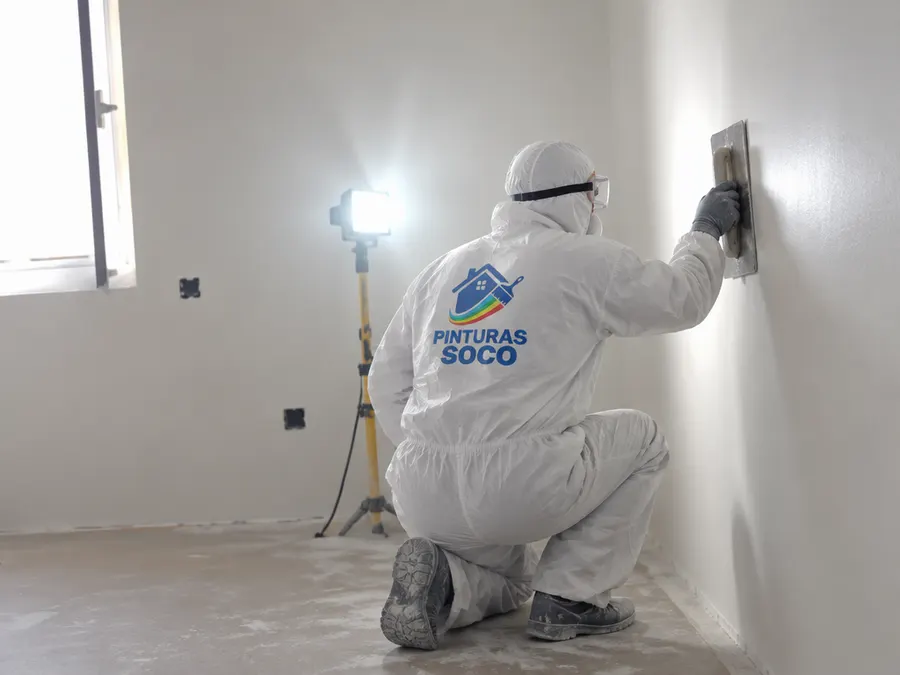
When the gotelé cannot be removed without damaging the wall, what we do is cover it: filler is applied in several coats until the texture is covered, and then sanded until the surface is smooth and straight.
Done properly, the result is a wall just as smooth as if it had never had gotelé. The key is the final sanding: it is what separates professional smoothing from a job where you can still see the ripples in the light.
Which option suits your home?
It depends on the type of gotelé, how many coats of paint are on top of it and the condition of the wall. In practice, in many homes the two are combined depending on the room.
What matters is the end result: straight walls, free of marks and ready to paint in the colour you choose.
Can you live at home while the walls are being smoothed?
Yes, although it takes some organising. Smoothing creates dust, especially during sanding, which is why floors, furniture and doors are protected and the work is done area by area. Many families prefer to have it done before moving in or to take advantage of a few days away, but it is not essential.
The mistakes that make smoothing show
- Not enough sanding: in the low-angle light from a window you can see ripples and marks.
- Not filling cracks and dents properly: they reappear when you paint.
- Painting without preparing the filler: the paint can end up patchy or be absorbed unevenly.
- Trying to rush it all: each coat needs its drying time.
Good smoothing does not show: it simply looks as if the wall was always smooth.
After smoothing: choosing the colour
With smooth walls, colours look so much better. Light shades make spaces feel bigger and make the most of the coastal light. If you fancy something different, a wall in decorative stucco looks perfect on a smoothed surface.
What properly done smoothing includes
- Protection of floors, doors and sockets.
- Removing or covering the gotelé.
- Filling cracks, holes and dents.
- Sanding every wall.
- Final painting in the chosen colour.
We come to see it for free, check which type of gotelé you have and explain what suits it best before giving you the quote in writing.
Frequently asked questions
Can walls be smoothed without removing the gotelé?
Yes. When it cannot be removed, it is covered with filler and sanded until the wall is smooth.
Does smoothing include the painting?
Yes, the job ends with the walls painted in the colour you choose.
How do I know which gotelé I have?
During the free visit we check it and explain which option suits you.