Types of paint
Which paint to use in each part of the home
Not every wall in a home calls for the same paint. One that is perfect in a bedroom can cause problems in a bathroom. We explain what suits each place so you know what to ask for in your quote.
The most common types of interior paint
- Emulsion paint (pintura plástica): the most widely used on walls and ceilings. It is thinned with water, covers well and is easy to clean.
- Acrylic paint: higher quality and tougher, very durable and with good adhesion.
- Paint for damp areas: designed for bathrooms and kitchens, with additives that make it harder for mould to appear.
- Enamels: for doors, skirting boards, woodwork and metal. They give a hard, washable finish.
- Stucco and decorative finishes: for walls you want to stand out.
Matt, satin or gloss
The finish matters too:
- Matt: hides imperfections in the wall and gives no reflections. Ideal on ceilings and in living rooms.
- Satin: a slight sheen, more resistant to scuffs and easy to clean. Very practical in hallways and children’s rooms.
- Gloss: very washable, but it shows up any defect in the wall. It is kept for woodwork and specific areas.
Living room and bedrooms
The usual choice is a good-quality emulsion or acrylic paint, in matt or satin. If you have children or pets, it is worth making sure it is washable. For the main wall of the living room or the wall behind the bed, a decorative stucco gives a finish with a lot of character.
Kitchen and bathroom
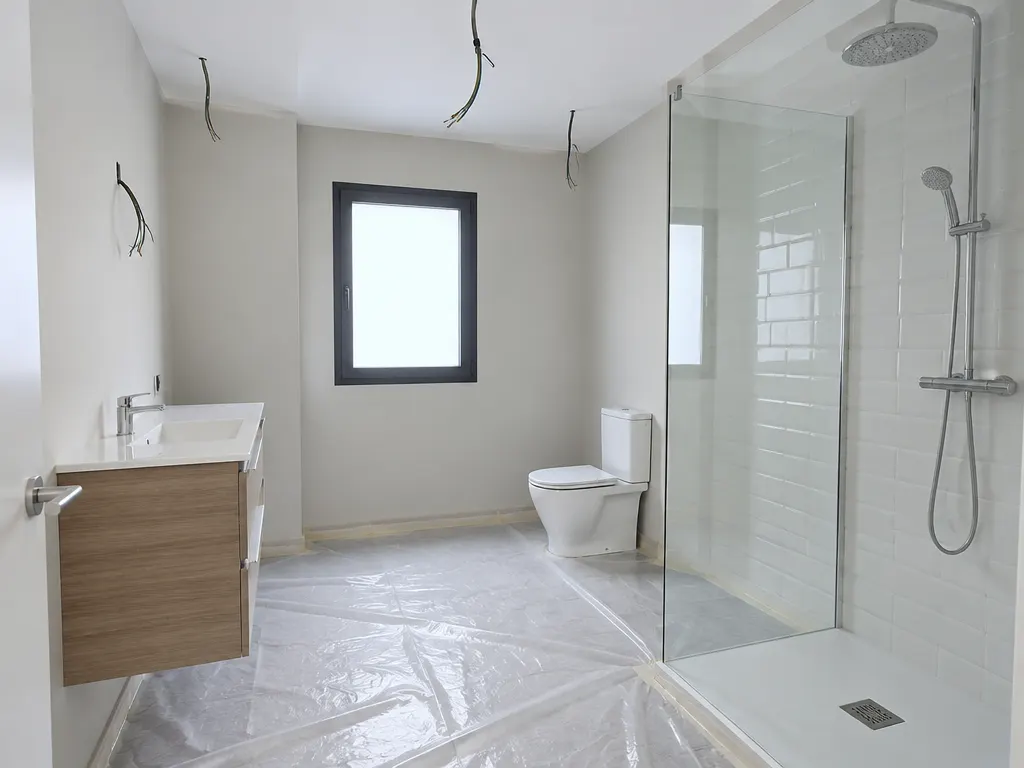
These are the most demanding rooms: steam, temperature changes, grease and splashes. Here the right choice is a washable paint designed for damp areas, which makes it harder for mould to appear. If there are already black stains, they have to be cleaned off and disinfected before painting.
Ceilings
Ceilings are normally painted in matt, which avoids reflections and hides unevenness. In bathrooms and kitchens, in the version for damp areas too. White is still the most common choice because it gives light and a sense of space.
Low-odour paints
Today most interior paints are water-based and smell far less than they used to. If there are children, elderly people or anyone sensitive to smells at home, ask about it during the visit: there are low-emission options that let you use the room again sooner.
Colour and light
The same paint does not look the same in a living room with a big south-facing window as in an inner bedroom. On the coast, with so much light, very white colours can feel cold and very dark ones make rooms hotter. Before deciding, it is worth seeing the colour on the wall itself and at different times of day.
- Bright rooms: they can take slightly stronger shades.
- Inner or dark rooms: light colours that reflect the light are better.
- Ceilings: white or a shade lighter than the walls to gain height.
One coat or several?
It depends on the paint, the starting colour and the condition of the wall. Changing from a dark colour to a light one, or painting over a freshly repaired wall, usually needs more coats. What matters is that the result is even, with nothing showing through and no patches.
Doors, skirting boards and window grilles
Woodwork needs enamels, which stand up to knocks and daily use. Lacquering the doors does a lot to freshen up a home. Window grilles and railings take paints made specifically for metal.
During the visit we advise you on the paint and finish for each room, and we set them out in the quote.
Frequently asked questions
Which paint is best for a bathroom with no window?
A washable paint for damp areas that makes it harder for mould to appear. If there is already mould, it has to be treated first.
Matt or satin for the living room?
Matt hides imperfections better; satin is easier to clean. It depends on the condition of the wall and how the room is used.
Do you paint doors too?
Yes, we lacquer doors and paint woodwork.